
Let Me Ask You Something
A Spiritual Practice of Questions - Advent Week 1
Did you detect…
My true heart wandering in a wood of lies?
R.S. Thomas, “A Priest to his People”
Call the world if you Please “the vale of Soul-making.” Then you will find out the use of the world… I say “soul making.” How then are Souls to be made? How then are the sparks which are God to have identity given to them – so as ever to possess a bliss peculiar to each one’s individual existence? How, but by the medium of a world like this?
John Keats, letter – April 1819
Mary said to the angel, “How can this be?”
Gospel of Luke 1:34
AUDIO VERSION
Once a student said to me in anger, “Let me ask you something. Do you ever tell the truth?”
I did not answer him. I did not know how.
As I remember the experience, he was angry about something that wasn’t really my fault. He wanted to do something in our film class that wasn’t possible, and he had convinced himself that I was going to make it happen. But I couldn’t. And I think what he wanted to say was I am really mad at you right now, but he didn’t have the words for that, so it came out in this question.
Do you ever tell the truth?
Brutal, brilliant question.
It has stayed with me, like a perfect line from a song. I cannot get it out of my head. It has stuck around in my mind and heart. The purity of it. The intensity. The insistence and sharpness, like a razor. Do I every really tell the truth? Am I even capable of it?
I am sure he did not know he was like an angel – a straight clear messenger from the mystery with a question just for me.
I teach a class to seniors in high school called “Questions in Theology,” where we try to explore the Catholic theological tradition through a series of questions. Does life have meaning? Can God be trusted? Who am I? What does it mean to grow spiritually? What is love able to transform? And then we come at these questions from all angles, using the depth of the tradition and our own lives and experiences. We pose answers and try them out. And when it works, it is pretty good.
At the start of this year I asked my students to write me at least ten questions each. They are beautiful questions. I read them, and they seem to me like prayers – questions and worries and hopes lifted from the hearts of young people.
Here are a few (from more than 300):
1. When did you know God was real?
2. Do you think choices made in your youth more or less define you forever?
3. What is a good human life?
4. How do you know if someone truly loves you?
5. What is your favorite part about being a teacher?
6. How do I get over my fear of talking to other people?
7. What if money wasn’t a thing and we could all live equally with one another?
8. Do you regret anything you have done in your life?
9. When someone you know and love is doing something wrong, how should you approach it?
10. Is it OK to be mad at someone who could have ruined your life?
11. Is it ever too late to change what you do in life?
12. How do I know God is truly listening?
13. How do I get over the thoughts that I am not good enough?
14. Why should I believe in God? (Is Pascal’s wager simply a fear trap?)
15. Are we able to take our time in life?
16. Is home a place or people?
17. Is there a point where even the small things in life will feel like enough?
18. What are some of the hardest things to come to terms with?
19. Why can we feel so disconnected from God even when we make him the center of everything we do and make time for him?
20. Have you ever received any clear signs from God about anything?
21. Does it ever get easier?
I have kept a copy of these questions with my journal for the past few months. And I keep reading them. Some of these questions I could answer easily, but many I can’t. But there is something beyond the possible answers that I am interested in here. Something happens in me as I encounter the sincerity of their questions, the honesty, the boldness. They seem to approach the world as it is - with longing, with fear, with hope for their lives.
There is a lovely short poem by David Ignatow called “With the Door Open.”
Something I want to communicate to you.
I keep my door open between us.
I am unable to say it,
I am happy only
with the door open between us.
There is something about questions – good questions – that keeps the door open. They can move us into a new space, the kind of space that our souls need to be able to grow, to learn, to make room for God.
I once had the opportunity to sit down with Fr. Richard Rohr, the well known Franciscan priest and author who started the Center for Action and Contemplation (CAC) in New Mexico. It was at the turn of the millennium – January 1, 2000. I was in Albuquerque with two friends for a retreat at the CAC, and we had done some volunteer work at the conference so we could stay in the Center’s guest rooms for free. I had been able to meet Richard during the days of retreat. He would give two or three talks each day, and we had run into him at meals and in the evening sessions.
It is hard to explain the impact Richard Rohr has had on my life and thinking. Although I have been immersed in the Catholic Church for my whole life, it was my discovery of his work when I was 18 that led me on a deeper path – the path I am still on. I found a set of his tapes in the Catholic Campus Ministry Office at George Mason when I was a freshman. They were entitled “The Quest for the Grail,” and I thought they were a set of history lectures, so I borrowed them. I had never heard anyone speak of God and living with such courage and freedom. I listened to him, and I thought – I don’t know how you get to be like this man, but this is what I want. And I have been reading and listening to him for over thirty years.
So now, back 25 years ago in Albuquerque, the conference is over. We are staying on one extra day to help clean up, and I ask at the desk if Richard would be around to sign a book. They suggest I call his house and see. So I do. He answers, and tells me to come right over (he lives in a small hermitage near the Center.) I am 23 years old, and I have the chance to meet this man who has been so important for me. I am so nervous, and I don’t know what to do. On the walk over to his house, I tell myself, “Just think of one good question. Just ask him one intelligent question.” I knock on the door.
Richard is a short bald man with a grey beard (not unlike me today!) He invites me in, and we sit in his small living room. He is kind, and funny, and warm. And what I really remember from this encounter is that I did not ask him anything, because he simply asked me questions. Where was I from? How did I get here? What was I doing in Chicago? He asked me about my work, about the kids I met in the jail, about my studies, about my hopes for my life. I came there thinking I had to have one good question to impress him with. But instead he made me feel welcome, important, worth listening to. He asked me questions.
I think back on that experience so many years ago. I was mistaken that what I wanted from Richard that day was some information – some bit of wisdom I could take home with me, some possession.
What he gave me was his time, his curiosity, his compassion and sense of wonder.
When I left, he told me, “You must have had good parents. I can tell you have been well loved.”
Simone Weil, in her book Waiting for God, writes:
In the first legend of the Grail, it is said that the Holy Grail (the miraculous vessel that satisfies all hunger by virtue of the consecrated Host) belongs to the first comer who asks the guardian of the vessel, a king three-quarters paralyzed by the most painful wound, ‘What are you going through?’
The love of our neighbor in all of its fullness simply means being able to say to him: ‘What are you going through?’
To ask a sincere question of someone – a truly curious and open question – is an act of love.
In the Gospels, Jesus asks dozens of questions. And he is genuine in asking them. Some questions are gentle, loving, encouraging. Some are scathing, furious questions. But they are questions – they open the door to those he meets – and he is really interested in an answer.
Scholars have put together lists from the four Gospels and have come up with around 170 questions that Jesus asks to his friends, to those who are looking for healing, to the leaders who persecute him, and to God.
I took a few and put them together as a sort of poem.
Some Questions of Jesus
What do you want me to do for you?

Is not life more than food and the body more than clothing?
Can any of you by worrying add a single moment to your life?

How many loaves do you have?
Who among you will give your children a stone when they ask for bread?
Or give them a snake when they ask for fish?
Have you understood all these things?
Why are you so afraid?

Why do you notice the splinter in your brother’s eye yet fail to perceive the wooden beam in your own eye?
If you love only those who love you, what reward do you have?
And if you greet your brothers and sisters only, what is unusual about that?
Is a lamp brought to be put under a basket or under a bed rather than on a lamp stand?

Simon, are you asleep? Couldn’t you stay awake for one hour?
Why did you doubt?
Why do you ask me about what is good?
Why are you thinking such things in your heart?
Can you drink the cup that I am going to drink?

Who touched me?
Why were you looking for me?
Do you see this woman?
What is your name?

Woman, where are they, has no one condemned you?
Woman, why are you crying?

What good will it be for someone to gain the whole world, yet forfeit their soul?
Or what can anyone give in exchange for their soul?

My God, My God, why have you forsaken me?

Do you love me?
Do you love me?
Do you love me?
Perhaps when all things are done, what we will encounter is not a perfect, airtight answer, nor a brutal, final judgment on things.
Perhaps God’s presence will be pure attention. A question whose depths calls out to us, that creates such space in our hearts that finally we come to rest. Finally we set down our defenses and say what has really happened, what we have carried, what we long for and what we have lost. We can finally say who we have failed, and what we have most loved.
God speaks to us, and keeps the door open.
Christ comes into the world - a persistent, brilliant, honest question that we cannot forget.
For Reflection:
Advent is the liturgical season of waiting – of preparing ourselves for God to come into the world at Christmas.
This is a time of patience, of waiting, of creating space for God to speak. Perhaps it is a time for listen to the questions that God is trying to ask of us?
Try to think of two or three questions that are important in your life right now. What questions are pressing on you, worrying you, staying in your mind? Can you spend some time with those questions – and listen to what God might be saying to you through them?
A follow up to this practice could be trying out sincere, patient question on the people in our lives. We are often in such a hurry to move through life that it can seem disarming or disruptive to ask a thoughtful question. Maybe this week we can take the risk of asking someone in our life what they are going through.
Resources:
Questioning God by Timothy Radcliffe, OP and Lukasz Popko, OP is a wonderful book about questions between God and human beings from the scriptures. The book is a conversation between Radcliffe, a priest in his 80s from England, and Lukasz Popko, a young Dominican priest from Poland who is a profound scripture scholar. It is worth the read. I have also linked below a video of Fr. Radcliffe giving a talk about the book.
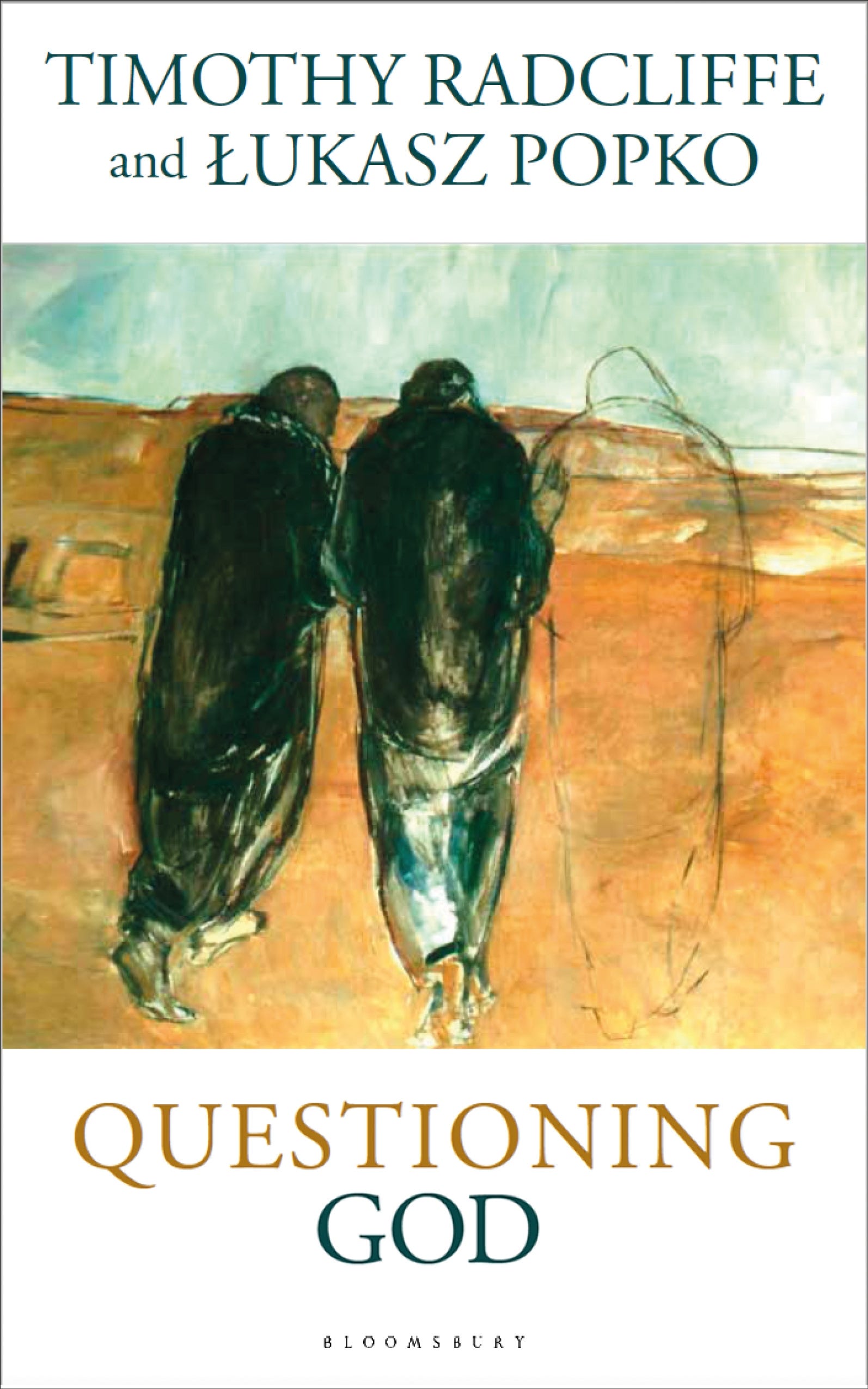
About the book: https://www.bloomsbury.com/us/questioning-god-9781399409254/
Two Poems
Some Questions You Might Ask by Mary Oliver
Is the soul solid, like iron?
Or is it tender and breakable, like
the wings of a moth in the beak of the owl?
Who has it, and who doesn’t?
I keep looking around me.
The face of the moose is as sad
as the face of Jesus.
The swan opens her white wings slowly.
In the fall, the black bear carries leaves into the darkness.
One question leads to another.
Does it have a shape? Like an iceberg?
Like the eye of a hummingbird?
Does it have one lung, like the snake and the scallop?
Why should I have it, and not the anteater
who loves her children?
Why should I have it, and not the camel?
Come to think of it, what about the maple trees?
What about the blue iris?
What about all the little stones, sitting alone in the moonlight?
What about roses, and lemons, and their shining leaves?
What about the grass?
from House of Light (Beacon Press, 1990)
Sometimes by David Whyte
Sometimes
if you move carefully
through the forest,
breathing
like the ones
in the old stories,
who could cross
a shimmering bed of leaves
without a sound,
you come to a place
whose only task
is to trouble you
with tiny
but frightening requests,
conceived out of nowhere
but in this place
beginning to lead everywhere.
Requests to stop what
you are doing right now,
and
to stop what you
are becoming
while you do it,
questions
that can make
or unmake
a life,
questions
that have patiently
waited for you,
questions
that have no right
to go away.
Rainer Maria Rilke – from “Letters to a Young Poet”
Rilke was a German speaking poet who lived and wrote at the beginning of the 20th century. His letters to a young poet were collected into a short volume which is one of the great works of literary guidance and spiritual advice of the past century. This is a very well known quotation from one of the letters about “questions.”
You are so young, so much before all beginning, and I would like to beg you, dear Sir, as well as I can, to have patience with everything unresolved in your heart and to try to love the questions themselves as if they were locked rooms or books written in a very foreign language. Don’t search for the answers, which could not be given to you now, because you would not be able to live them. And the point is, to live everything. Live the questions now. Perhaps then, someday far in the future, you will gradually, without even noticing it, live your way into the answer. Perhaps you do carry within you the possibility of creating and forming, as an especially blessed and pure way of living; train yourself for that -- but take whatever comes, with great trust, and as long as it comes out of your will, out of some need of your innermost self, then take it upon yourself.
Lovely, provocative, consoling. Thank you.